Confidence Should Not Rise Faster Than Evidence
The new risk in AI-enabled work is premature certainty.
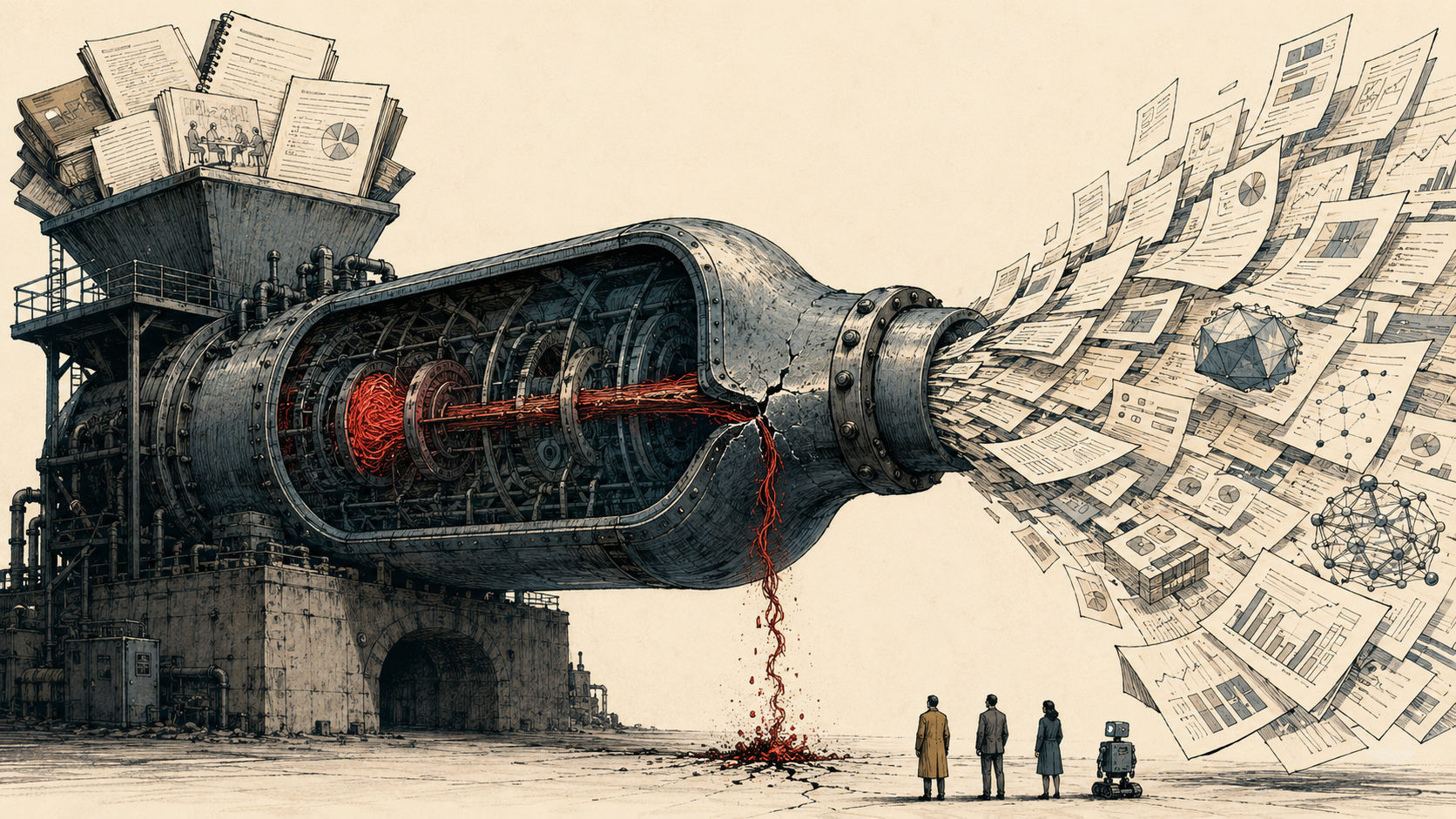
AI makes confidence cheap. It can turn scattered notes into a fluent memo, a partial transcript into a decisive summary, weak evidence into a polished recommendation, and uncertain thinking into a deck that looks ready for the board. That is useful. It is also dangerous.
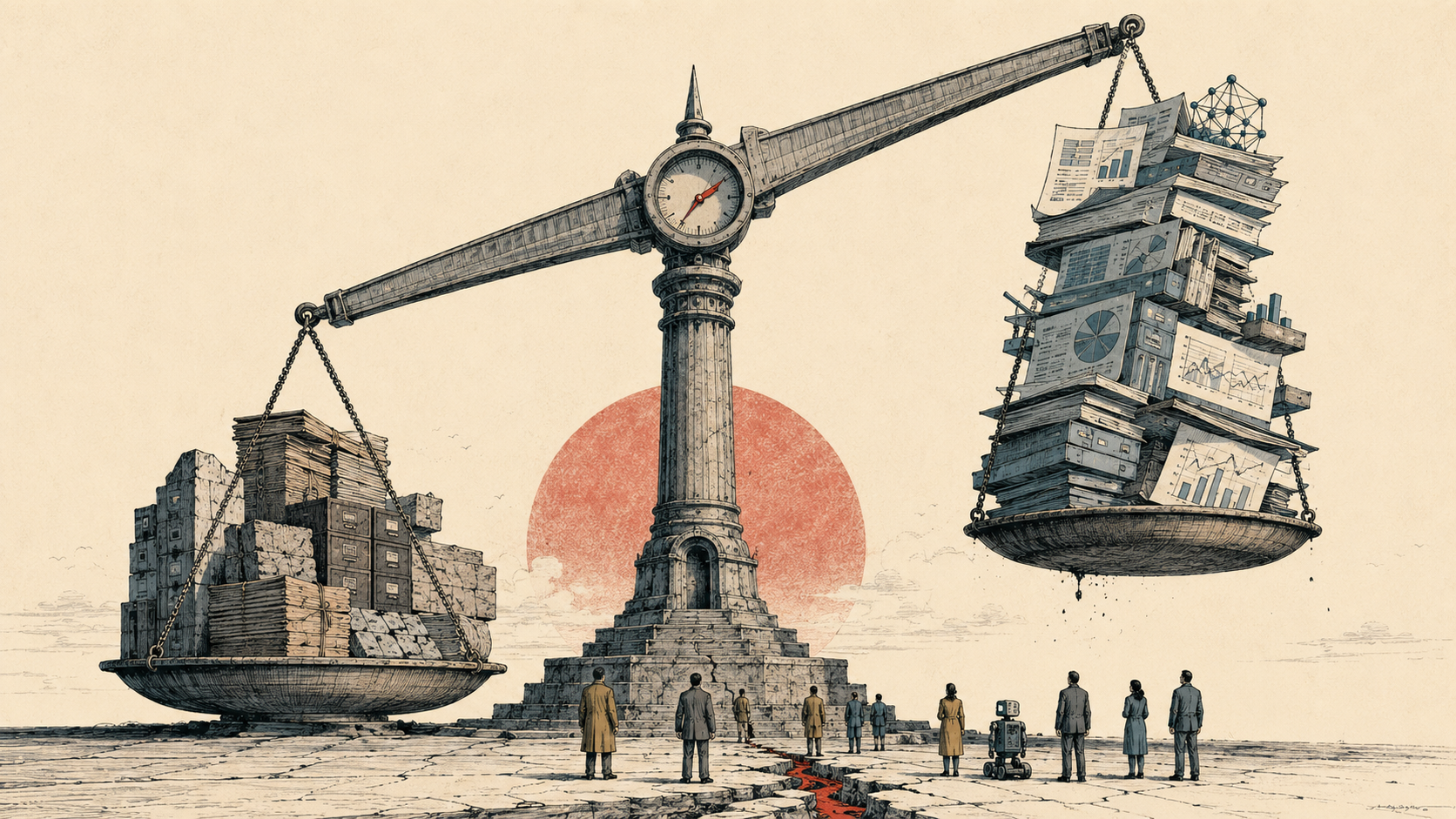
The danger is not only that AI systems can be wrong. The deeper danger is that they can make uncertain material feel settled before the organisation has earned that certainty. In AI-enabled work, the new risk is premature confidence — and confidence should not rise faster than evidence.
Fluent does not mean grounded
Organisations have always confused polish with clarity. A well-designed deck feels more convincing than a messy memo. A confident speaker feels more authoritative than a careful one. A simple narrative feels more actionable than an unresolved tension. AI intensifies this bias. It can make almost anything sound coherent — removing hesitation, smoothing contradiction, filling gaps, imposing structure and creating the tone of authority — even when the underlying material is partial, stale, weak or contradictory.
This creates a gap between how grounded something is and how grounded it feels. A recommendation can look complete while its evidence is thin. A summary can sound neutral while it has removed the most important caveat. A strategy can feel aligned while different teams are interpreting it differently. An answer can cite a source without faithfully representing what the source supports. A risk analysis can sound balanced while ignoring the strongest counterargument. Fluency is not grounding, structure is not evidence, and confidence is not truth.
The old problem had friction
Before AI, producing confidence took effort. Someone had to write the memo, build the deck, organise the argument, edit the language and prepare the recommendation. That effort did not guarantee quality, but it created friction: people had more chances to notice uncertainty, revisit sources, ask colleagues, challenge assumptions and feel the cost of premature closure.
AI reduces that friction. A polished answer can appear before the hard thinking has happened. This is not always bad — speed is valuable, first drafts are useful, summaries save time, and agents can reduce enormous amounts of repetitive work. But when speed removes friction, organisations need another way to preserve judgment. They need systems that ask:
- What evidence supports this?
- What is being assumed?
- What contradicts it?
- How current is the source?
- Is the answer stronger than the material allows?
- Has this been reviewed?
- Who understands it?
- What would change our mind?
Without those questions, confident language starts to outrun organisational knowledge.
Premature certainty is different from hallucination
Hallucination gets most of the attention because it is visible and easy to condemn: the model invented a fact, the citation was false, the answer was wrong. Premature certainty is more subtle. The information may not be fabricated, the source may exist, the summary may be plausible, the recommendation may be directionally reasonable — but the confidence may still be too high.
The system may have treated a limited source as representative, collapsed disagreement into synthesis, removed ambiguity because the user asked for clarity, converted an expert’s cautious phrasing into a bolder claim, or presented a working hypothesis as an organisational conclusion. This is often harder to detect than hallucination because nothing is obviously fake. The problem is calibration. The answer may be partly right, but too certain; the conclusion useful, but overextended; the decision sensible, but under-evidenced. The organisation may move, but from a false sense of understanding.
Organisations reward certainty
Premature confidence is not only a model problem. It is an organisational problem. Most organisations reward clarity, speed and decisiveness: leaders want recommendations, teams want direction, customers want answers, boards want confidence, investors want a narrative, and AI tools are asked to compress ambiguity into action. This creates pressure to make things cleaner than they are. The caveat becomes a footnote, the contradiction a minor risk, the assumption invisible, the weak evidence a bullet point, the contested interpretation the company position.
AI is very good at satisfying that pressure. It can create the language of certainty faster than the organisation can verify the basis for it. That is why the solution cannot be only better prompts or more careful users. The organisation needs infrastructure that keeps confidence attached to evidence.
What calibrated work looks like
Calibrated work does not mean timid work. It does not mean every sentence must be hedged, that organisations should move slowly, or that AI should avoid producing useful answers. It means the level of confidence should match the strength of the underlying support. A strong claim with strong evidence should be allowed to sound strong. A weak claim with weak evidence should not be dressed up as certainty. A disputed claim should carry the dispute. A decision based on incomplete evidence should preserve the trade-off. A summary should not erase the uncertainty that mattered in the source. An agent should know when it can act, when it should draft, when it should ask, and when it should escalate.
Calibrated work makes organisations faster because it reduces false alignment. People do not waste time later discovering that they had been acting from different assumptions. Teams do not reverse decisions because the evidence was weaker than the presentation suggested. Agents do not treat every retrieved passage as equally authoritative. Calibration is not caution for its own sake; it is speed with a working relationship to reality.
The evidence chain
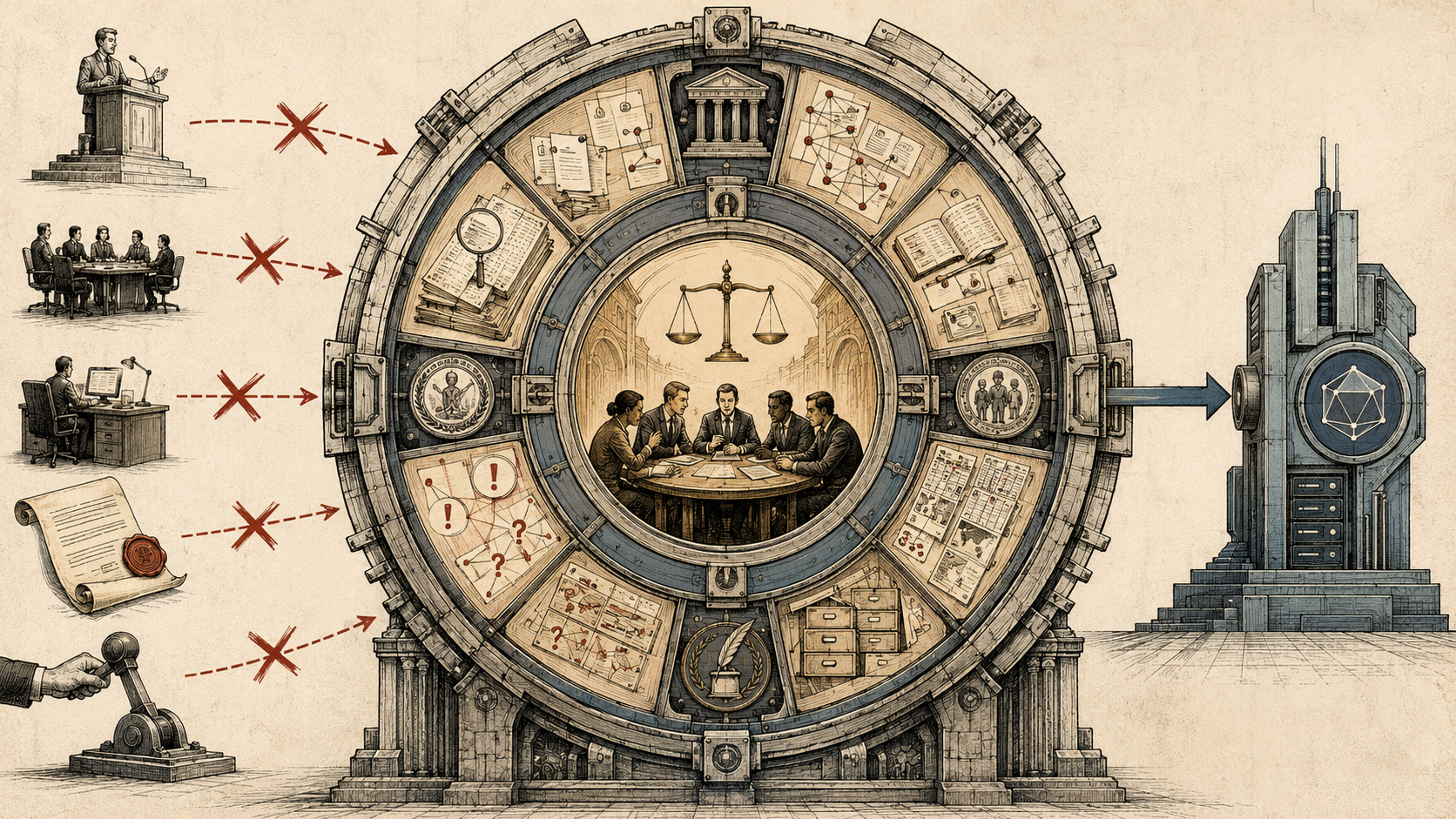
To keep confidence calibrated, organisations need to preserve the evidence chain. That means each important output should be connected to the sources, claims, assumptions, contradictions and decisions beneath it. When a recommendation appears, the organisation should be able to inspect what supports it. When a strategy is communicated, it should be able to see what changed from the original decision. When a summary is generated, it should be able to compare it to the source. When a claim is reused, it should know whether it has been verified, challenged or superseded. And when confidence is high, the organisation should know why.
This is where many current systems fail. They preserve the finished artefact but not the structure that justified it. The deck remains, but the reasoning fades. The memo remains, but the caveats disappear. The AI answer remains, but the source relationship is unclear. The task remains, but the decision context is lost. If confidence is to stay connected to evidence, the chain must remain visible.
Comprehension is part of calibration
There is another side to the problem: even when a message is well-grounded, it may not be understood. A strategy may be accurate but interpreted differently by Engineering, Sales and Operations. A policy may be clear to Legal but confusing to the teams who must apply it. A leadership update may be read by everyone and understood by almost no one. An AI-generated explanation may be elegant but fail to change how people act.
Confidence in communication should not come from publication. It should come from comprehension. Did the audience understand the decision? Did they retain the caveat? Did they interpret the key term in the same way? Did they know what changed, and what action follows? If not, then the organisation’s confidence in alignment is premature. This matters because many organisations measure distribution instead of understanding — they know who opened the message, who attended the meeting, who received the deck and who completed the training, but they do not know whether meaning landed. In an AI-enabled organisation, that is a dangerous blindness.
Designing against false certainty
The answer is not to make AI less useful. It is to make organisational meaning more inspectable. Systems should be designed to surface weak claims, missing evidence, unresolved contradiction, stale sources, changed context, audience misunderstanding and excessive confidence. They should make it easy to ask:
- What is asserted here?
- What supports it?
- What is missing?
- What contradicts it?
- What changed from the source?
- Which parts are reviewed?
- Which parts are still uncertain?
- Who understood it?
- What can be safely acted on?
This is not bureaucracy. It is the minimum infrastructure required when machines can produce authoritative language at scale. The faster work moves, the more visible the grounding must become.
A new discipline for AI-enabled organisations
Every major technological shift creates a new discipline. The web created new disciplines around information architecture, search and digital experience. Cloud created new disciplines around reliability, security and operational observability. AI will create a new discipline around meaning: how organisations preserve the relationship between evidence, confidence, communication, comprehension and action.
The organisations that master this will not be the slowest or most cautious. They will be the ones that can move quickly without losing contact with what is actually known. They will generate, but also ground. They will summarise, but also preserve uncertainty. They will automate, but also know action boundaries. They will communicate, but also measure understanding. They will use AI not to manufacture certainty, but to make the basis of confidence more visible.
Confidence should not rise faster than evidence. That may become one of the defining operating principles of serious AI-enabled organisations.