The Meaning Crisis in the Age of AI
AI made output abundant. The scarce resource is now grounded understanding.
AI has made it easier than ever to produce work. Documents, summaries, answers, decks, strategies, research briefs, meeting notes, customer updates, policy explainers, onboarding material, board packs and agent actions can now be generated at extraordinary speed. That has changed the surface of work, but it has not solved the deeper problem.
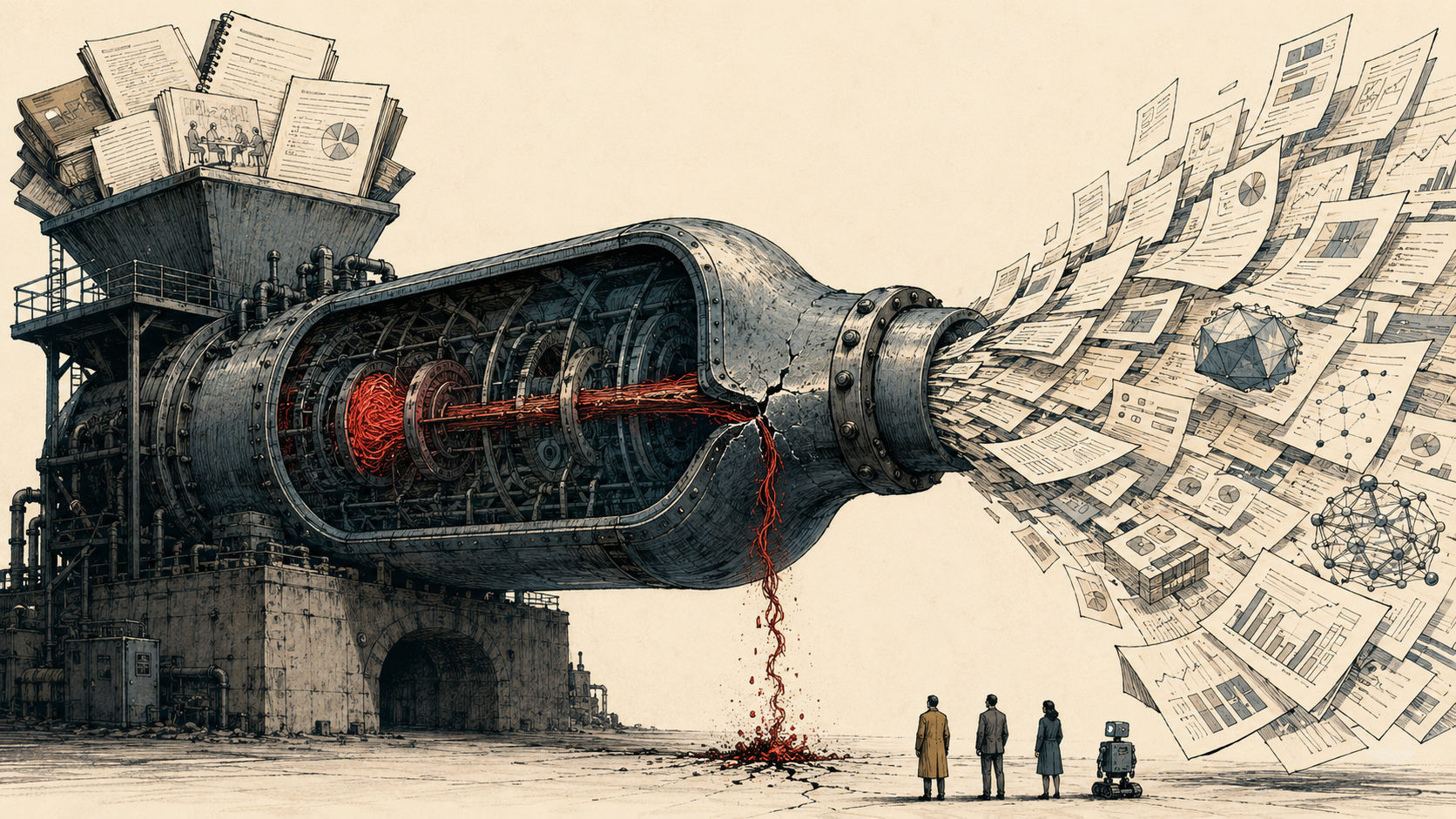
Most organisations do not have a production problem anymore. They have a meaning problem. As work moves between people, teams, systems and machines, meaning decays. Sources detach from claims. Decisions lose their rationale. Confidence rises faster than evidence. Contradictions disappear into summaries. Teams align around words they interpret differently, and AI agents act from fragments without knowing what is current, approved, contested, stale or safe to use.
The result is strange: organisations look more productive, but often become less coherent. More is produced, and less is understood.
Output is no longer the bottleneck
For decades, organisations treated communication as a production challenge. Can we write the strategy? Can we prepare the deck? Can we document the process, summarise the meeting, produce the customer narrative, train the new team, turn expert knowledge into usable material? AI has dramatically lowered the cost of all of that. It can draft, summarise, translate, transform, reformat, explain, compress and extend; it can turn transcripts into notes, notes into memos, memos into slides, slides into emails, emails into action plans, and action plans into tasks.
But production was never the whole problem. The deeper question is not whether the organisation can produce the document, but whether the document still means what it should mean once it has moved. Did the claim keep its evidence? Did the summary preserve the caveat? Did the decision retain its rationale? Did the deck reflect the source, or mutate it into something more confident than it deserved? Did Product, Sales, Operations and Leadership understand the same thing? Did the AI agent retrieve the right fragment, or act from a partial, outdated or contradicted view of the organisation?
The bottleneck has moved from content production to meaning preservation.
Meaning fails in transfer
Communication rarely fails in one dramatic moment. It usually fails quietly. A meeting produces a transcript, but not a shared understanding of what mattered. A strategy memo becomes a leadership deck, then a team update, then a set of OKRs, then a customer-facing statement, and at every step something shifts. A number loses its context. A decision becomes a suggestion. A caveat disappears. A claim that was tentative becomes firm. A dependency becomes invisible. An unresolved contradiction is flattened because the slide needs to look clean.
Nobody intends the distortion. It happens because most organisational systems preserve artefacts, not meaning. They store the file, keep the message, index the transcript, save the deck, preserve the wiki page, archive the email, and make the material searchable. But they do not preserve the structure behind understanding:
- what is being claimed
- where it came from
- what evidence supports it
- what assumptions it depends on
- what contradicts it
- who approved it
- what changed as it moved
- which version is authoritative
- how confident the organisation should be
- whether the intended audience actually understood it
That structure is the real substrate of organisational intelligence. When it disappears, the organisation does not become ignorant all at once; it becomes noisy, overconfident and misaligned.
AI makes the old failure faster
AI does not create every organisational communication problem. People have always misunderstood each other, teams have always rewritten strategy, documents have always lost context, and executives have always mistaken distribution for alignment. What AI does is make the old failure faster, cheaper and harder to see. A weakly evidenced claim can now become a polished recommendation. A partial meeting note can become an authoritative summary. A rough idea can become a strategy deck. A messy debate can become a neat synthesis that hides the unresolved tension. A stale document can be retrieved and used as if it still represents the current state of the organisation.
The danger is not only hallucination. Hallucination is easy to name; the more subtle danger is synthetic authority — fluent, structured, plausible output that feels more grounded than it is. When language looks complete, people treat it as if the meaning underneath is complete. That is where organisations become fragile.
They do not fail because nobody wrote anything. They fail because everyone is acting from different hidden versions of what the writing means.
Search is not enough
Search helps people find information. Retrieval helps AI systems pull relevant material into context. Knowledge bases help teams store and reuse documents. Collaboration tools help work move faster. All of these are useful, but none of them, alone, solves the meaning crisis.
Search can find a document, but it does not tell you whether that document is current, superseded, contradicted or still authoritative. Retrieval can bring back a chunk, but it does not know whether that chunk is a source, a summary, a decision, a draft, a weak claim, a disputed interpretation, a customer promise or an approved organisational position. A knowledge base can store the answer, but it does not necessarily know why the answer is believed, what evidence supports it, what uncertainty remains, or whether the audience understood it. A collaboration tool can distribute the message, but it does not know whether the meaning landed.
This is why the next layer cannot simply be another place to store information or another model to generate it. The next layer must preserve meaning.
What meaning infrastructure does
Meaning infrastructure begins with a different unit of work. The unit is not the file, the page, the message, or the AI output — it is structured understanding.
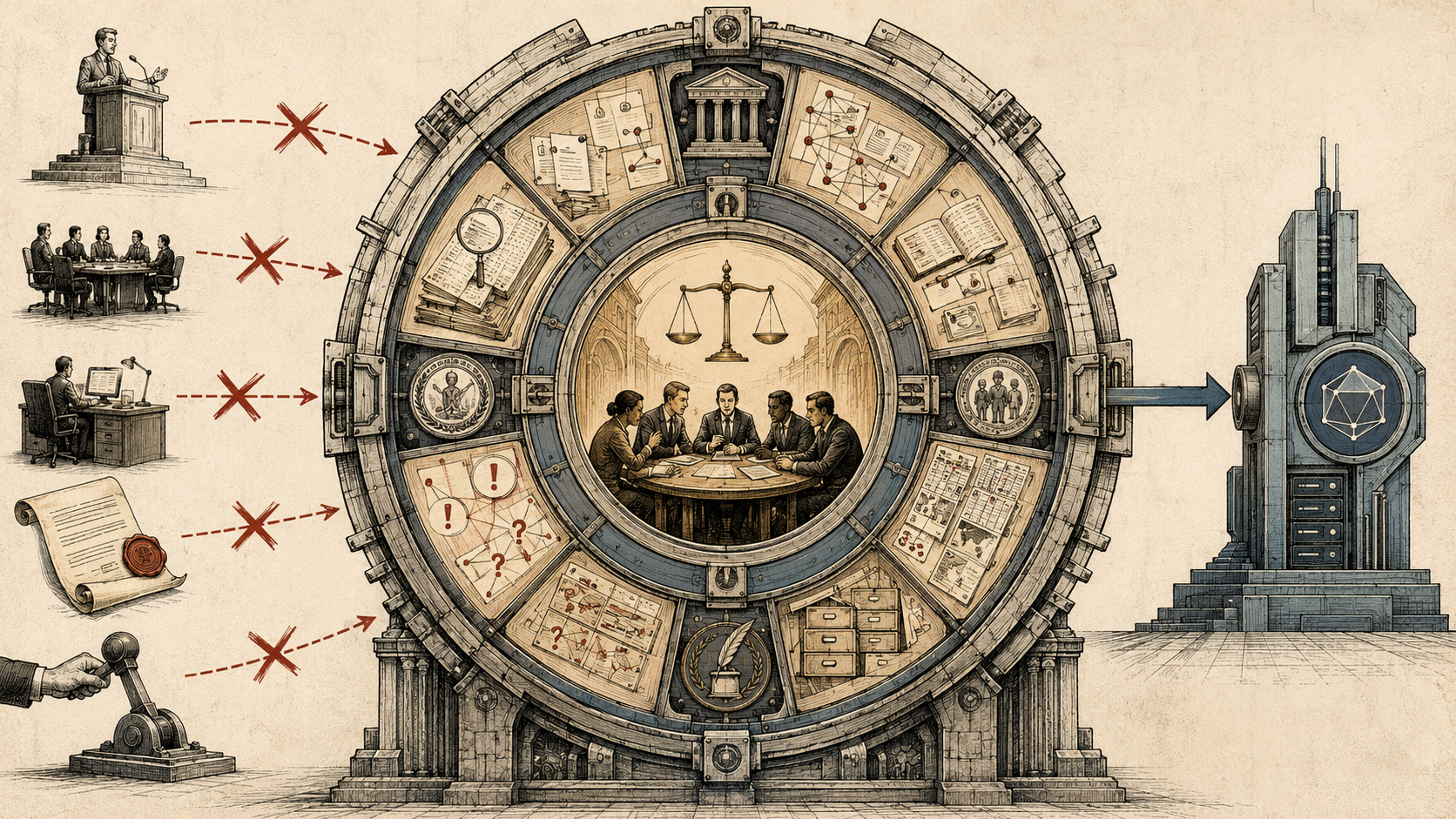
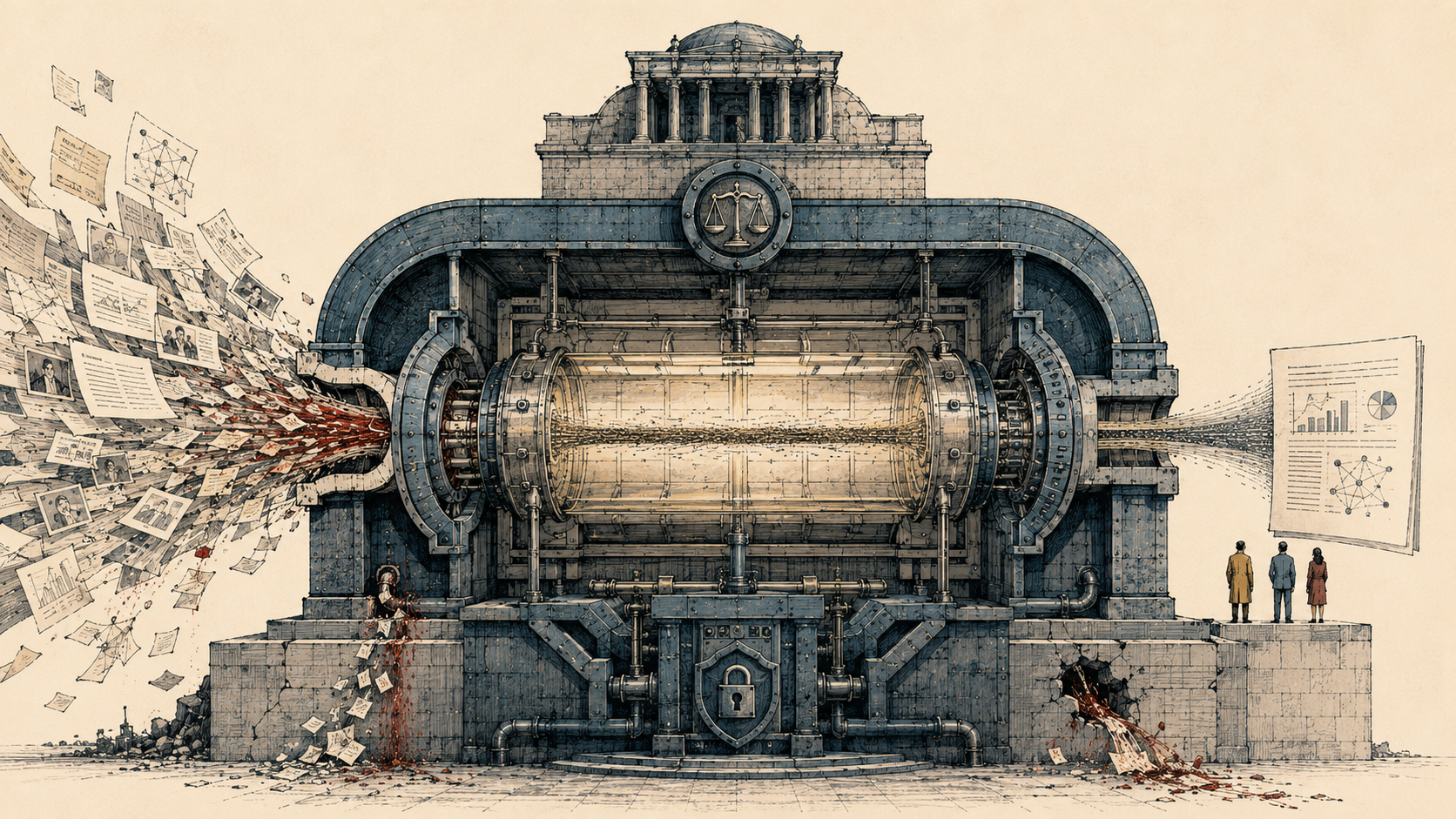
A meaning system identifies and preserves the relationships that make communication trustworthy and usable. It keeps sources attached to claims, evidence attached to conclusions, and decisions attached to rationale. It keeps contradiction visible instead of smoothing it away. It tracks how meaning changes as work moves across formats, teams and time, and it measures whether communication was understood, not only whether it was sent.
That is the missing layer between information and action. Without it, organisations produce more material but do not become more aligned; they search more but do not necessarily know more; they automate more but do not necessarily act from a sounder basis. With it, work becomes cumulative: research becomes reusable understanding, meetings become decision memory, strategy becomes shared context, communication becomes measurable, and AI agents can act from grounded organisational meaning rather than improvised fragments.
The organisation needs memory, but not only memory
Many teams say they need organisational memory. They do — but memory alone is not enough. An archive remembers what existed; a meaning system remembers what mattered, and the difference is crucial.
An organisation does not need every old document to come back equally. It needs to know which claim survived review, which decision superseded which draft, which assumption later proved false, which source still carries authority, which contradiction remains unresolved, and which teams never understood the strategy in the first place. That is not passive memory but active orientation: it helps the organisation know where it is, what it knows, what it does not know, what has changed, and what can be acted on.
The future enterprise will be meaning-aware
The AI-enabled organisation will not simply be the one with the most copilots, chatbots, automations or agents — those things will be everywhere. The real advantage will belong to organisations that can preserve meaning under speed. They will know where their claims came from, which decisions are grounded, and which communications were understood. They will know where confidence exceeds evidence, which contradictions matter, what their agents are allowed to act from, and how meaning changed as it moved.
In the industrial age, organisations built infrastructure for production. In the digital age, they built infrastructure for information. In the AI age, they need infrastructure for meaning — because AI has made output abundant, and understanding is still expensive.
And the organisations that can preserve it will move faster, decide better and act with more confidence than those still mistaking production for alignment.