Meaning in the Loop
Against blind corrigibility — why AI does not just need human control, it needs legitimate meaning.
There is a seductive idea in AI safety: make the system corrigible. Make it willing to be corrected. Make it accept shutdown. Make it defer to human intervention. Make it permit changes to its goals, its instructions, and its operating frame.
At first, this sounds obviously right. If intelligence becomes more capable, then surely humans need the ability to correct it. The machine should not resist us. It should not hide from us. It should not treat our interventions as obstacles. It should remain open to human redirection.
But there is a harder question beneath the word corrigible.
Corrected by whom?
Not humanity in the abstract. Not wisdom in the abstract. Not “the human” as a clean moral category. In the real world, correction comes from somewhere: a leadership team, a product owner, a government department, a safety board, a manager, a regulator, a client, a bureaucracy, a founder, a platform company, or a committee with incentives, blind spots, politics, and partial knowledge.
So the question is not simply whether the machine can be corrected. The question is whether the act of correction is itself legitimate.
That is where the next layer of AI infrastructure begins.
The problem is not obedience
Most organisations are still thinking about AI in the language of output. Can it write the report? Can it summarise the meeting? Can it generate the deck? Can it answer the customer? Can it automate the workflow?
But as AI systems move from producing content to taking action, the centre of gravity changes. The important question is no longer: can the machine do the task? It becomes: from what understanding is the machine acting?
Once we ask that, “human control” becomes an insufficient answer. A human can be wrong. A team can be misaligned. A company can have no shared memory of why a decision was made. A policy can contradict a strategy. A manager can override a grounded system with an ungrounded instruction. An agent can act from the latest message rather than the most defensible meaning.
The danger is not merely that AI disobeys humans. The danger is that AI obeys humans too well, while nobody has resolved what the organisation actually means.
Control without understanding
The crude version of AI governance says: keep a human in the loop.
But this phrase hides the hard part. Which human? Looped into what? With what evidence? Against what prior decision? Aware of which contradiction? Authorised by which process? Remembering which context? Accountable to whom?
A human in the loop is not enough if the loop has no memory. It is not enough if the human is operating from a fragment. It is not enough if the organisation itself has not formed a shared understanding.
The real risk is control without understanding.
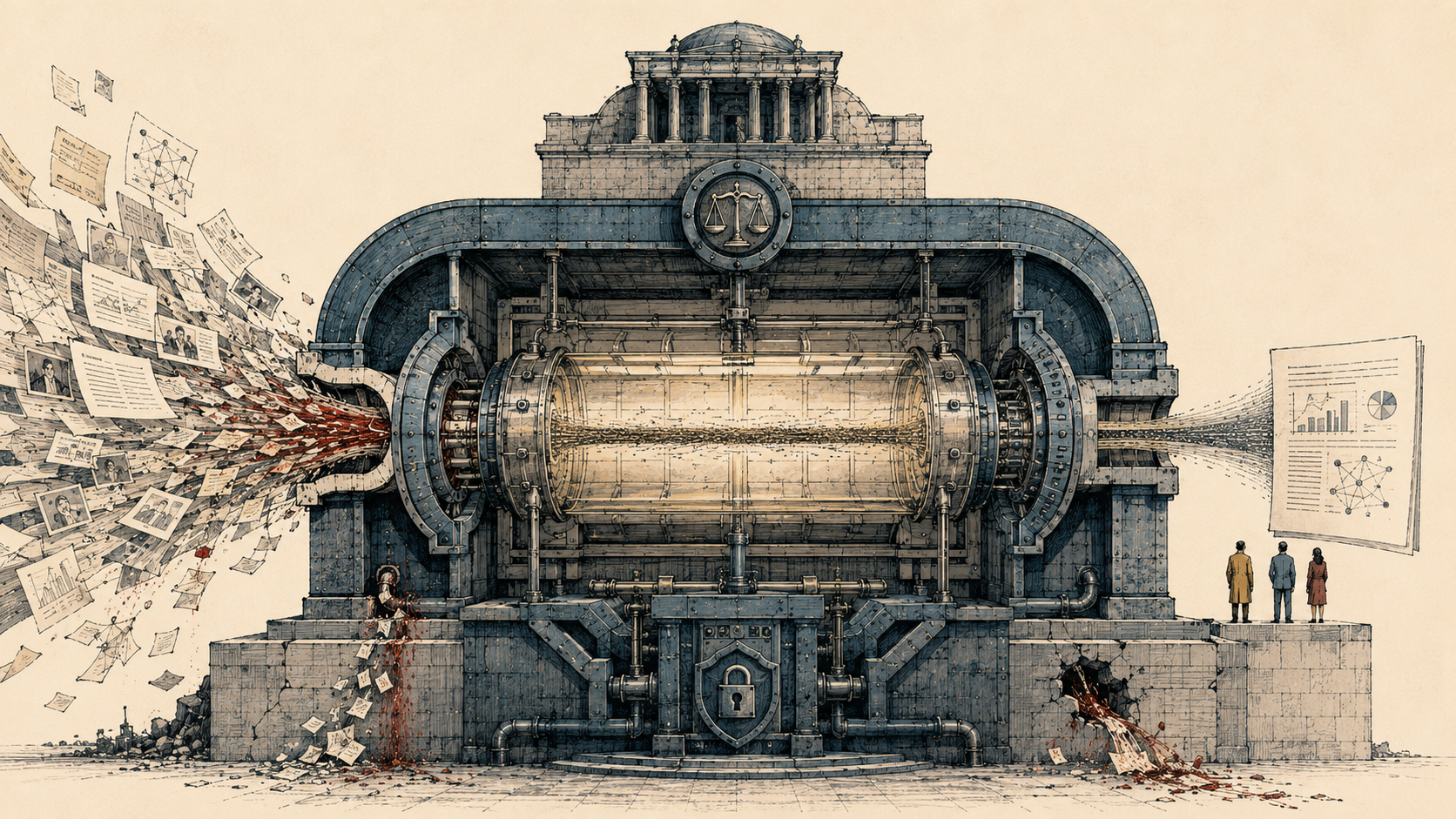
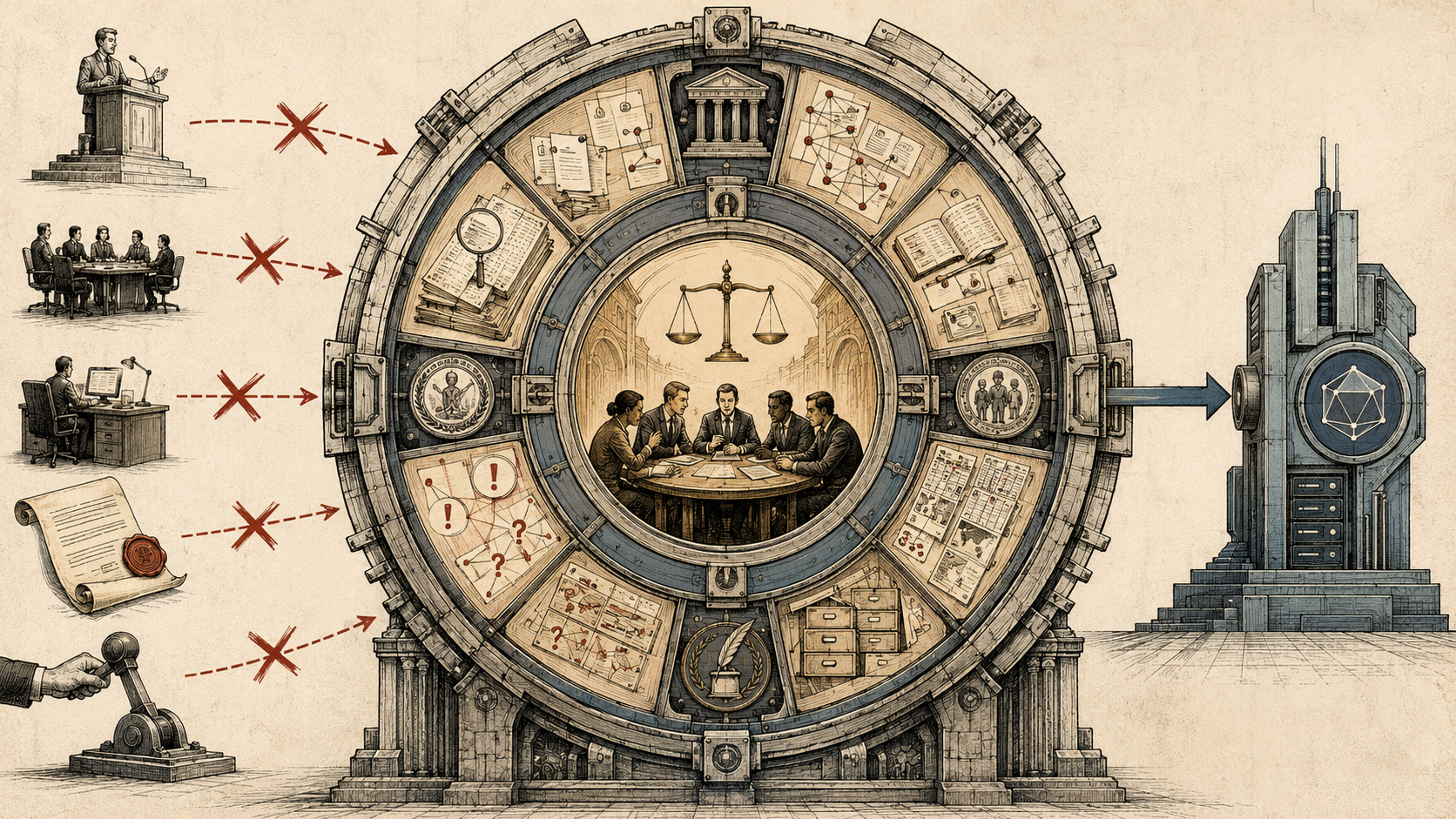
A system that is corrigible to the wrong interface becomes a machine for amplifying whoever controls the correction channel. This is not safety. It is obedience with better manners.
Meaning in the loop
The better principle is not simply human-in-the-loop. It is meaning-in-the-loop.
Before an AI system acts, it should know what the organisation has actually understood. Not merely what was said most recently. Not merely what appears in the latest slide deck. Not merely what one executive wants. Not merely what one policy says in isolation.
It should know what claims have been made, what evidence supports them, what assumptions are still live, what contradictions have been found, what decisions have been taken, what remains unresolved, who has authority over which interpretation, what should be treated as trusted context, and what should not yet be acted upon.
That is the missing layer between human institutions and machine action.
Correction should be accountable
In a mature AI organisation, correction is not just a command. It is a structured act.
A correction should be able to say: this claim is wrong because it contradicts this source. This decision has changed because this constraint has changed. This agent should not act because the underlying meaning is unresolved. This output is not trusted because provenance is missing. This instruction conflicts with a prior commitment. This strategy cannot be operationalised until these assumptions are resolved.
That is very different from simply giving humans an override button. The override button asks whether we can stop or redirect the machine. The deeper question asks whether we can explain why the correction is valid.
This is where AI safety becomes organisational epistemics.
Organisations are not ready for agents
Most companies are now preparing to connect AI agents to real work. They want agents that can sell, support, analyse, decide, route, write, escalate, schedule, negotiate, report, and operate.
But most organisations have not solved the prior problem. They do not have a durable representation of what they know. Their knowledge is scattered across meetings, documents, decks, emails, chats, tickets, and the private memory of senior people. Their decisions are often detached from their evidence. Their strategies drift as they move between teams. Their customer promises differ from delivery reality. Their policies contradict their operating habits.
Their AI systems are being connected to work before the organisation has a stable account of what the work means.
This is not an output problem. It is a meaning problem.
The meaning layer
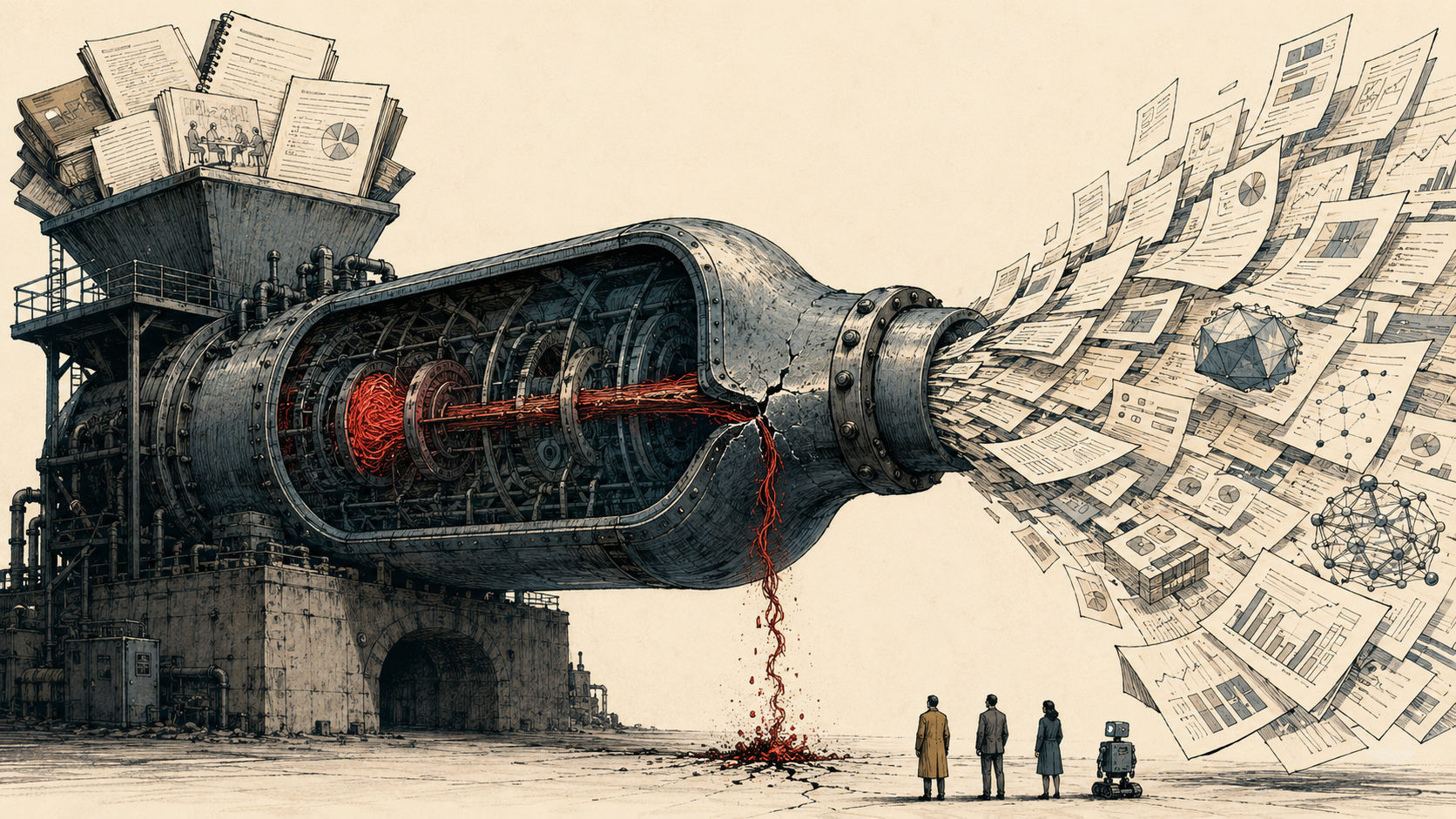
The next enterprise AI stack needs a meaning layer: a place where raw organisational material becomes structured understanding.
A place where sources, claims, evidence, assumptions, contradictions, questions, decisions, and narratives can be captured, formed, resolved, and reused. A place where humans can think together before machines act on their behalf. A place where agents do not merely retrieve documents, but inherit a resolved context. A place where outputs are not generated from fragments, but from defensible meaning.
This is the role of Orient.
Orient is not just a tool for making decks, reports, summaries, or briefings. Those are outputs. The deeper product is the meaning pipeline beneath them.
Orient captures source material, forms meaning, resolves what is uncertain or contested, frames that meaning into useful outputs, measures whether it landed, and equips humans and agents with the same trusted context.
That is the work.
Before delegation, orientation
The old internet made information abundant. Generative AI made fluent output abundant. Agents will make action abundant. But the scarce resource is now grounded understanding.
If machines are going to act inside organisations, then organisations need to know what those machines are acting from. Not just data. Not just documents. Not just embeddings. Not just prompts. Not just permissions.
Meaning.
The formed, evidenced, contested, resolved, authorised understanding that makes action legitimate.
Before intelligence can be delegated, meaning has to be resolved. Before an agent can act for an organisation, the organisation has to orient itself.
The real question
Corrigibility asks: can we correct the machine?
Orient asks a prior question: are we qualified to correct it?
Not morally qualified in the abstract. Epistemically qualified in the concrete.
Do we have the evidence? Do we have the memory? Do we understand the disagreement? Do we know what has been decided? Do we know what remains unresolved? Do we know which meaning the agent is about to act from?
The future of AI governance will not be solved by obedience alone. It will be solved by building systems where correction, delegation, and action are grounded in shared, inspectable, defensible meaning.
The problem is not simply making AI corrigible.
The problem is making correction itself trustworthy.
That is the work ahead.