The Organisation as a Living Meaning Graph
Companies do not run on documents. They run on beliefs, decisions, assumptions and actions.
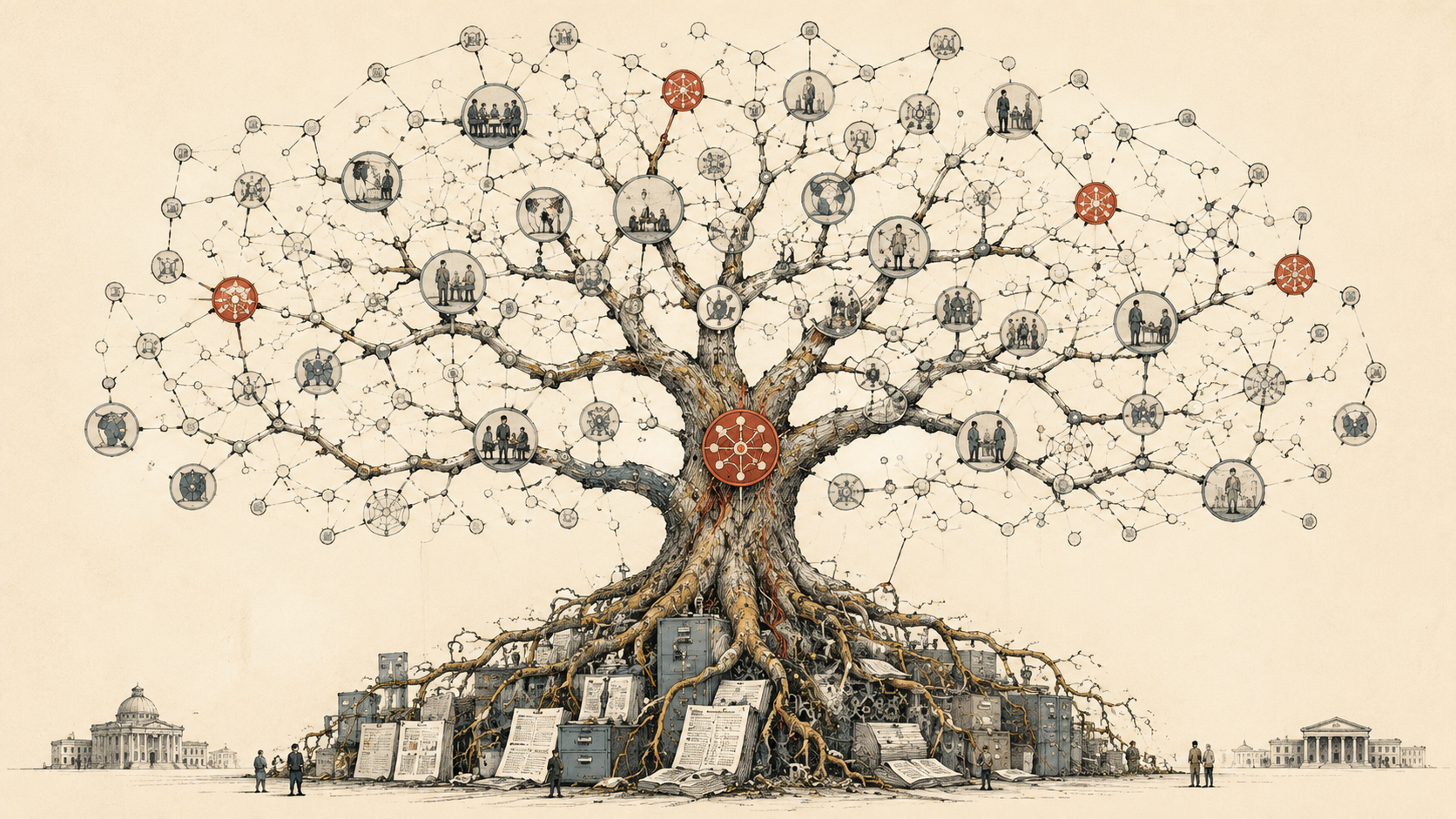
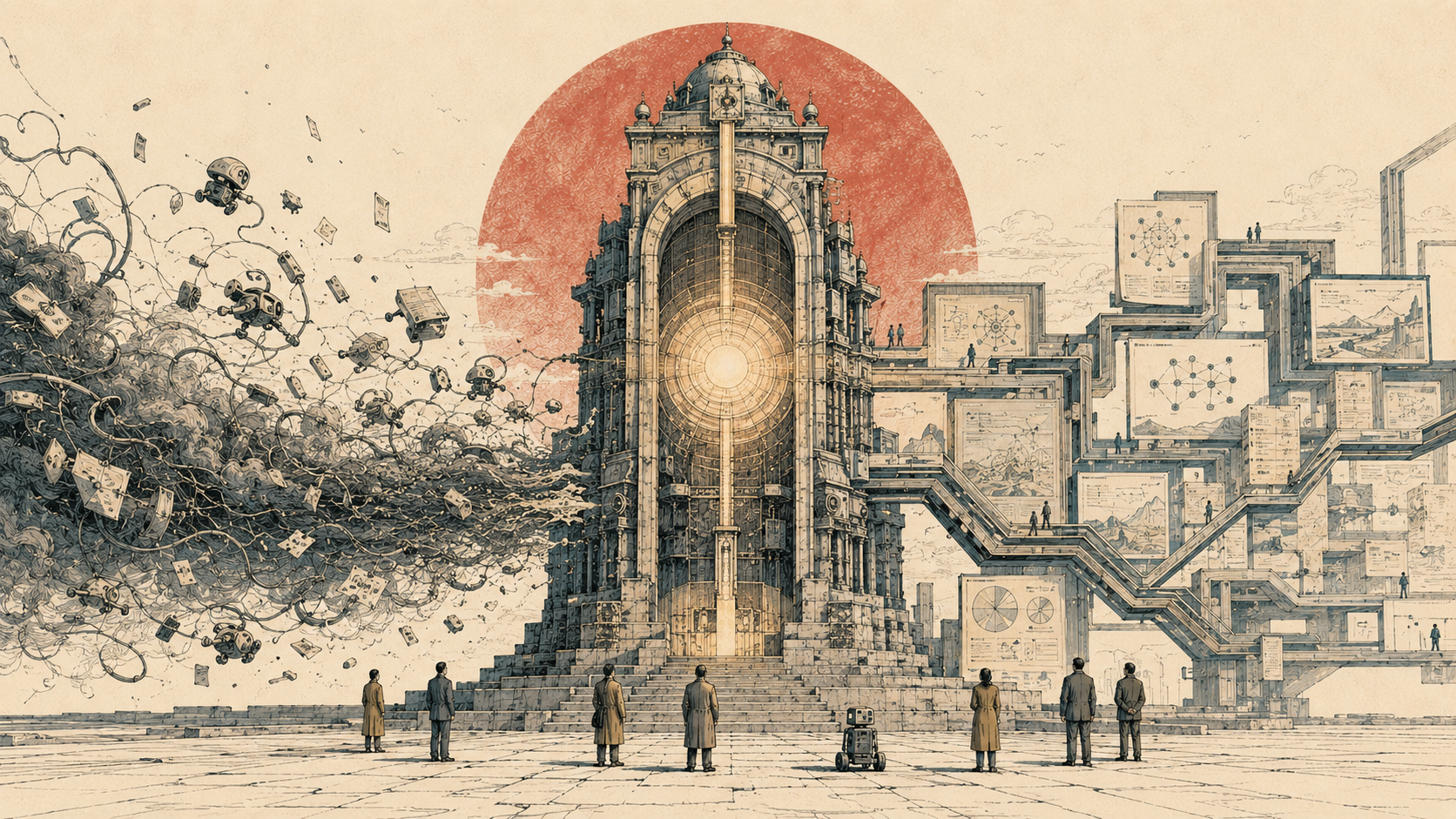
A company is not a collection of documents. It is a living structure of beliefs, decisions, assumptions, commitments, priorities, contradictions and actions. Documents matter because they carry some of that structure; meetings matter because they create and change it; messages matter because they move it; systems matter because they store and operationalise it; and AI matters because it now transforms and acts on it. But the organisation itself is not the archive — it is the meaning graph underneath.
It is the network of what people think is true, why they think it, what has been decided, what remains uncertain, which concepts connect, which teams understand which parts, which claims are contested, which assumptions are hidden, which commitments have been made and which actions are now possible. Most enterprise systems do not model that graph. They model artefacts.
The old stack stored things
The modern organisation has accumulated systems for every kind of artefact. Documents live in drives. Messages live in Slack or Teams. Meetings live in calendars, recordings and transcripts. Tasks live in project tools, customer records in CRM, policies in wikis. Decisions live somewhere between decks, email threads and memory; research lives in PDFs, notes and scattered folders; and AI outputs now live everywhere. This stack is useful — it stores work — but storage is not understanding.
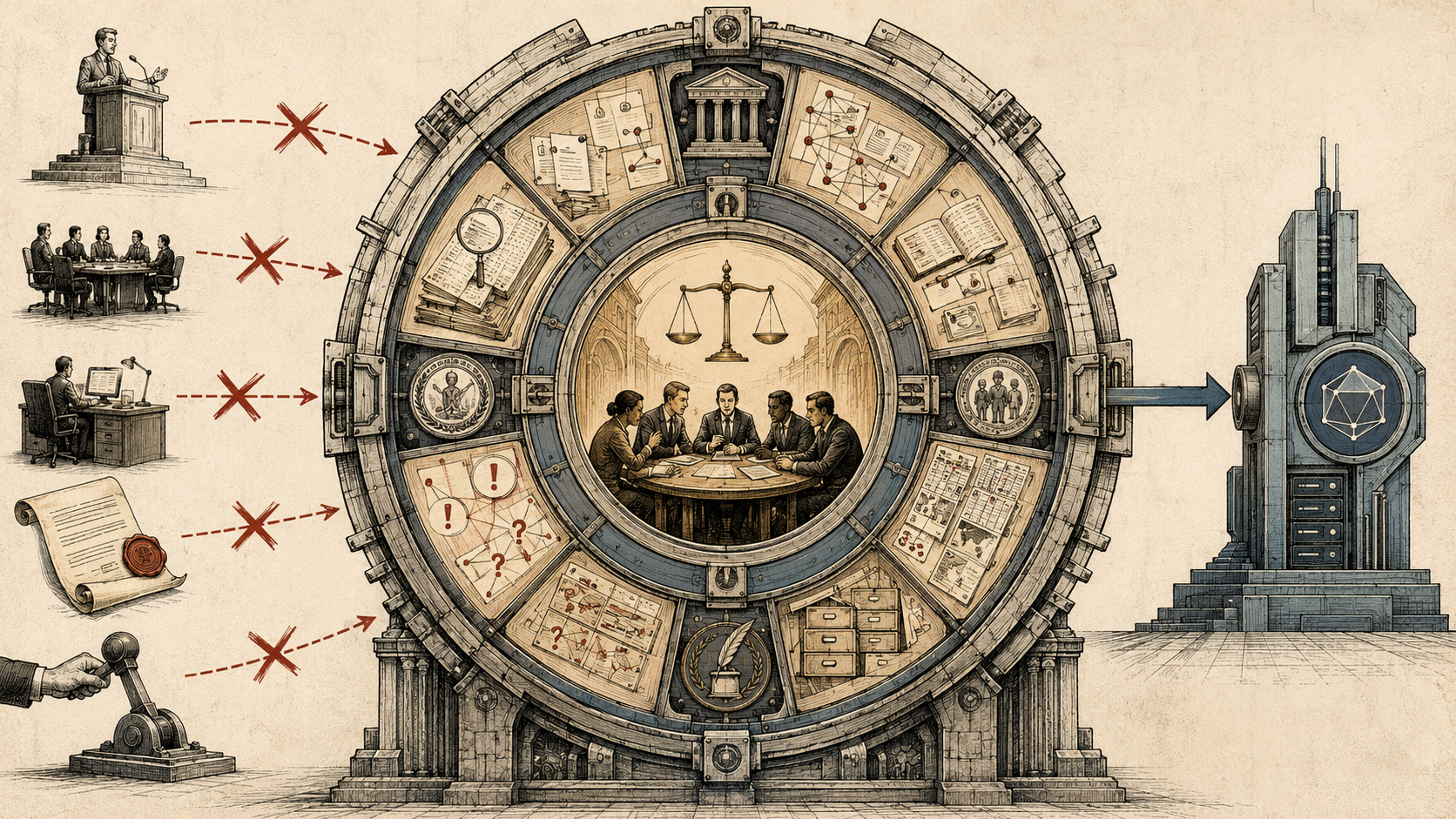
A folder does not know which document supersedes another. A transcript does not know which moment was the decision. A wiki does not know whether a page is still trusted. A deck does not know which claim lost its evidence. A chat thread does not know which unresolved disagreement later shaped the roadmap. A vector index does not know which fragment is an approved organisational position and which is merely a draft. The old stack preserves artefacts as separate things; the new stack needs to preserve meaning as connected structure.
Meaning is relational
Meaning is not contained in a single file. It lives in relationships. A claim means something because it comes from a source, is supported by evidence, depends on assumptions, sits within a context, may contradict other claims, carries some level of confidence and may lead to decisions or action. A decision means something because it resolves a question, chooses between options, reflects priorities, accepts trade-offs, authorises work and supersedes other possible paths.
A strategy means something because it connects a diagnosis of the world to a set of choices, constraints, risks, narratives and measures of success. A policy means something because it binds interpretation to procedure, authority, compliance and communication. A customer promise means something because it connects language to delivery obligations, product capability and trust. A meeting means something because it changes what people know, agree, question, own or need to do next.
Once you see this, the limitation of document-based systems becomes obvious. The document is only the visible trace. The meaning is the graph.
What a living meaning graph contains
A living meaning graph is not simply a knowledge graph with nicer branding, nor just entities and relationships extracted from text. It is an operational model of organisational understanding. It should know about claims, sources, evidence, assumptions, contradictions, decisions, concepts, questions, teams, audiences, outputs, versions, authority, confidence and comprehension.
It should know that a claim came from a source, appeared in a deck, was challenged in a meeting, revised in a later memo, accepted by leadership, misunderstood by one team and reused by an AI agent. It should know that a strategy shifted from one interpretation to another as it moved from executive planning to product roadmap to sales enablement. It should know that a piece of research supports one recommendation but weakens another, that two teams are using the same word differently, that a decision was made but its rationale is not yet documented, and where organisational confidence is higher than the evidence permits. This is not static knowledge management; it is organisational orientation.
Why AI agents need the graph
Humans can often compensate for weak systems by relying on memory, judgment and context. AI agents cannot be trusted to do that without help. An agent asked to produce, recommend or act needs more than files — it needs to know the status of the meaning it is using. Is this source current? Is this claim approved? Is this decision still valid? Is this assumption contested? Is this interpretation local or organisation-wide? Is this customer-facing language safe? Is this policy authoritative? Is this data point strong enough to support the recommendation? Has a human reviewed this? What should the agent do when it detects contradiction?
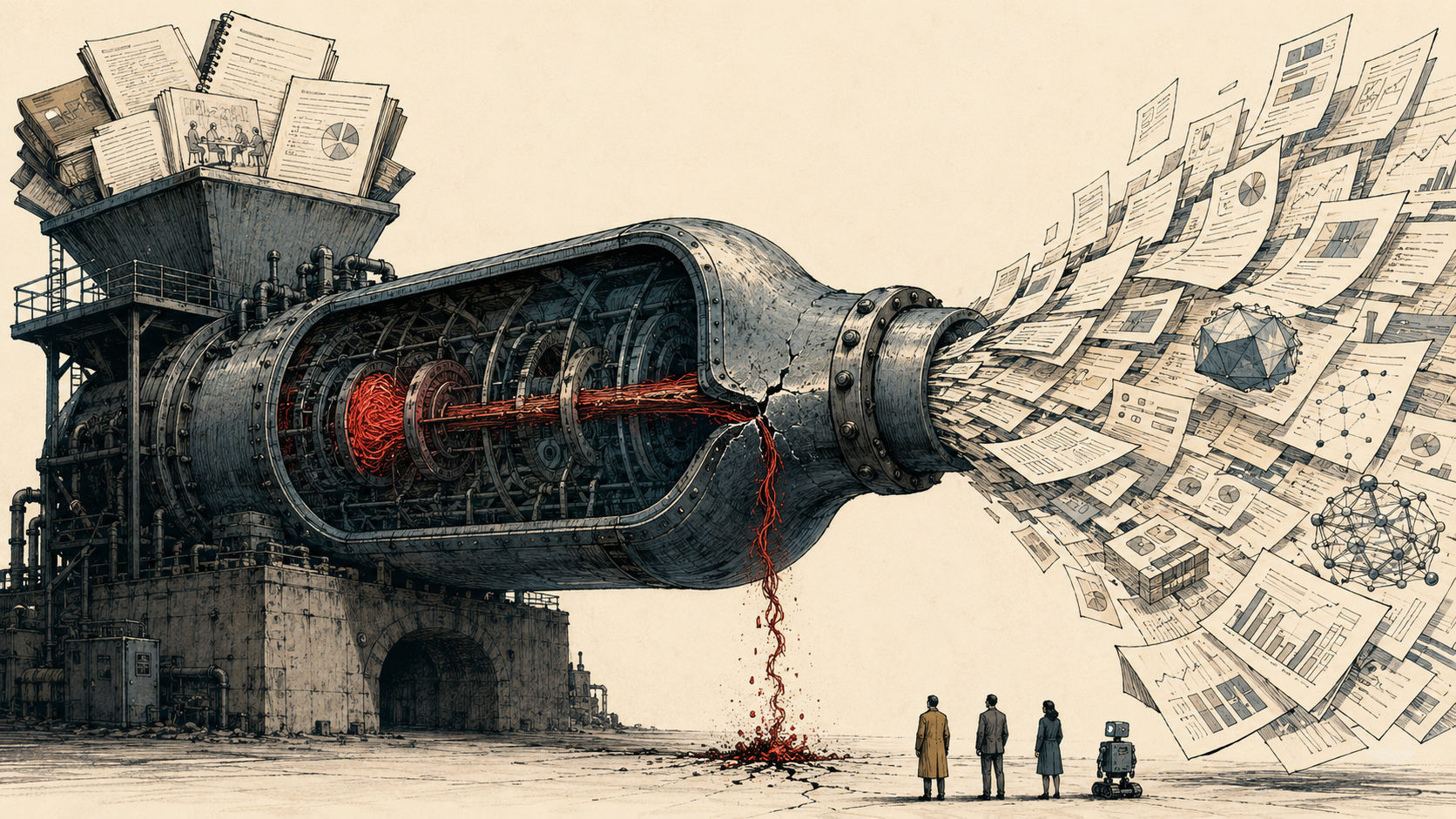
Without a structured meaning graph, agents are forced to improvise from retrieved fragments. That can work for low-risk drafting, but it is not enough for serious organisational action. The more capable agents become, the more important the meaning layer becomes. Agents do not only need access; they need orientation.
The graph is alive because meaning moves
A static knowledge base becomes stale because organisations move. Markets change, strategies evolve, people leave, policies update, products shift. Customer commitments accumulate, teams reinterpret priorities, research changes confidence, new evidence appears, and AI-generated outputs multiply. A living meaning graph updates as work moves. It does not treat meaning as fixed once published; it tracks how meaning travels and changes.
A leadership decision becomes a strategy note, then a product plan, then a sales narrative, then a customer commitment. Each transformation can be checked against the original meaning, each audience can be measured for comprehension, each contradiction can be surfaced rather than buried, and each later output can inherit the right context. This changes the role of communication. It is no longer send-and-forget; it becomes part of a loop — capture what is known, structure what it means, frame it for an audience, distribute it, measure whether it landed, improve the next version, and remember what changed. The organisation becomes sharper because meaning compounds instead of decaying.
From institutional memory to institutional intelligence
Many organisations talk about institutional memory. They usually mean: can we find what happened before? A living meaning graph asks something stronger — can the organisation use what happened before to understand and act better now? That requires memory to be structured: not just a transcript, but the decision inside it; not just a report, but the claims and evidence behind it; not just a strategy deck, but the assumptions, trade-offs and unresolved questions it carries; not just a communication, but whether the audience understood it; not just a summary, but how the meaning changed from the source.
When these relationships are preserved, organisational memory becomes usable by people and machines. A new employee can understand not only what the company decided, but why. A leader can see where alignment is weak. A team can discover that their interpretation conflicts with another function. An agent can draft from approved context rather than random fragments. A board can review not only the final recommendation, but the chain of reasoning behind it. That is institutional intelligence.
The graph changes the enterprise stack
The old enterprise stack asked: where is the information? The next enterprise stack asks: what does the organisation understand? That is a very different question. It requires systems that operate beneath documents, meetings, messages and AI outputs — systems that treat meaning as the shared substrate of work and preserve provenance, reasoning, contradiction, decision, confidence and comprehension.
This is why meaning infrastructure sits between several existing categories. It touches knowledge management, but is not only a repository. It touches enterprise search, but is not only retrieval. It touches communications, but is not only publishing. It touches learning, but is not only training. It touches AI governance, but is not only policy. It touches agent infrastructure, but is not only orchestration. It is the layer that allows all of those systems to operate from shared meaning.
The organisation becomes observable
One of the most important consequences of a living meaning graph is that understanding becomes observable. Leaders can see where meaning held and where it broke. They can see which claims are weak, which sources are missing, which contradictions are unresolved, which teams are misaligned, which communications failed, which concepts are interpreted differently and which decisions lack clear rationale. This does not make organisations perfectly rational; it makes the hidden structure visible.
That matters because most organisational failure is not caused by a total absence of information. It is caused by invisible divergence. People think they agree. Teams think they understood. Executives think the message landed. Agents think the context is sufficient. A living meaning graph gives the organisation a way to test those assumptions.
The future company is meaning-native
In the AI age, every organisation will generate more work than before. The question is whether that work will compound into understanding or decay into noise. A meaning-native organisation will not treat documents as the final unit of knowledge; it will treat them as surfaces generated from deeper structured understanding. It will know how claims connect to evidence, how decisions connect to rationale, how communication changes across audiences, and how confidence changes as evidence changes. It will know what people understood, and what agents can safely act from.
That is the organisation as a living meaning graph. Not an archive, not a folder, not a pile of outputs — a living system of understanding, memory and action.